Apparaît dans la collection : Balzan Conference on Open Issues in Gravitation
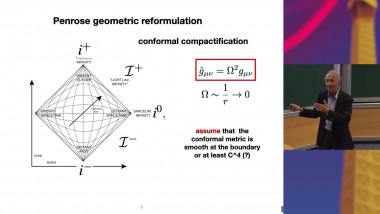
In recent years, numerical relativity has seen a surge of development, with new codes coming online and catalogs of simulations expanding to new parts of parameter space. However, the looming accuracy demands of next-generation detectors are also becoming ever more prevalent. In this talk, I will review some of the recent advancements that have been made in numerical relativity simulations of binary black holes, including improved waveform extraction, a more careful treatment of the BMS gauge freedom, and the resolution of subtle physical effects such as memory and tails. Following this, I will also discuss what we can expect from numerical relativity in the future and what is required from waveform models to be able to maximize the scientific return from future gravitational-wave observations.